Love thy father: my journey towards God
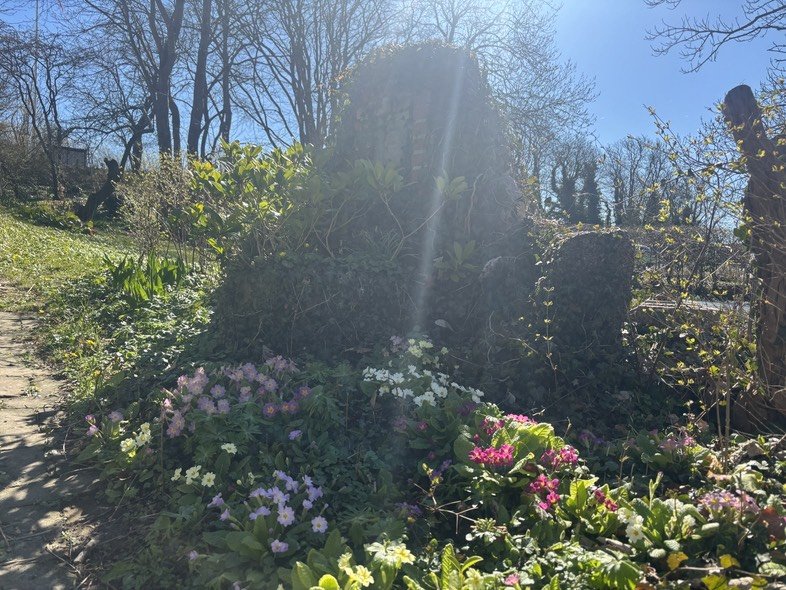
Photo credit: Marianne Møllmann 2024
When my father was actively dying, I had only received one of the two COVID vaccine jabs required. At the time, I was living in New York City, while the rest of my family was in Denmark. My brother and I discussed what we would do if our father passed away before I was fully immunised. My brother's suggestion was to wait with all preparations until I could be home. I proposed to proceed with cremation quickly after death, delaying inurnment and ceremony until I could be there. "I am too Christian for that", my brother retorted, meaning there could be no burning of the body until all rituals had been completed.
Faith and religion have never been live topics in my family, despite growing up in a country with a state religion. My parents declared themselves agnostics, though the only religion they directed both of their children to learn about was the one embedded in Danish state structures. The implicit message was that either you are Lutheran, or you are not religious at all. As a result, when I became curious about my faith and the bigger "whys", this was the tradition I first explored. And there have been several.
As an older teenager, I seriously considered converting to Judaism. It seemed to embody the tenets I valued. Accountability through self-reflection and atonement; a community focus that went beyond merely loving thy neighbour; a human-centric definition of sin. It was clear to me even at the time that we cannot be held responsible for our first thought: only for the second, and third, and for what we choose to do with the prejudices we have been bequeathed. It felt intelligent to me as a faith tradition, grounded in study, analysis, and a lifelong search for truth.
My first husband came from a devout Catholic family, even if he himself didn’t seem to have an active faith. When I met him, I started reading about liberation theology and felt connected to the collectiveness of it all. The rituals, the ways to reach God through incense, mirrors, and chants felt calming. Some elements were internally contradictory, yet the questioning inherent in the Jesuit tradition, in particular, still resonate with how I relate to the world. This was also the time when I thought being a nun might be nice: an active life focused on things that truly mattered, connected to the community service I intuited would be necessary for me to feel complete.
I attended my first Quaker meeting in London in the 90s. The toggle between silence and plain language felt both foreign and deeply known. Over the years, I frequented Meetings wherever I went, sitting with strangers in various locations in the US, Europe, Africa, and Latin America. I never made a conscious decision to adopt all the tenets of Quaker faith, nor did I officially join a Meeting. I simply sat with folks across most continents and felt the presence of something I later came to think of as God.
Even writing that feels pretentious: how could one ever know?
But this is where faith and knowledge become one: I don't "believe" the ethical north that grounds me (to mix all the metaphors) so much as I know it. It is also where a lifetime of religious curiosity pays off. I may have only considered officially joining faiths in the Judeo-Christian tradition; at the end of the day, the words we use to describe the divine matter, and those were the ones I could hear. But I read and explored so much further, and in so many ways: through yogic philosophy, personal journeys, organising, sitting with others as they pray. And so this is what I have come to believe/know.
I know there is love because I feel it. I know love isn't always a given, but it is always a potential. I know that strong communities require work, accountability, self-awareness, and hope. I know we can forge those bonds of love from as little as we are given and as much as we have.
These days, I call all of this "God", but I don’t have to, to know that it is there. In many ways, it is much less important to know who God is than to know what God is. And in my muddled, patched-up lifetime of searching, God is love. The love that made my brother do all he could to facilitate my participation in my father's funeral, even if his relationship with our joint parent was much stronger, and, certainly towards the end, much more real than mine.